
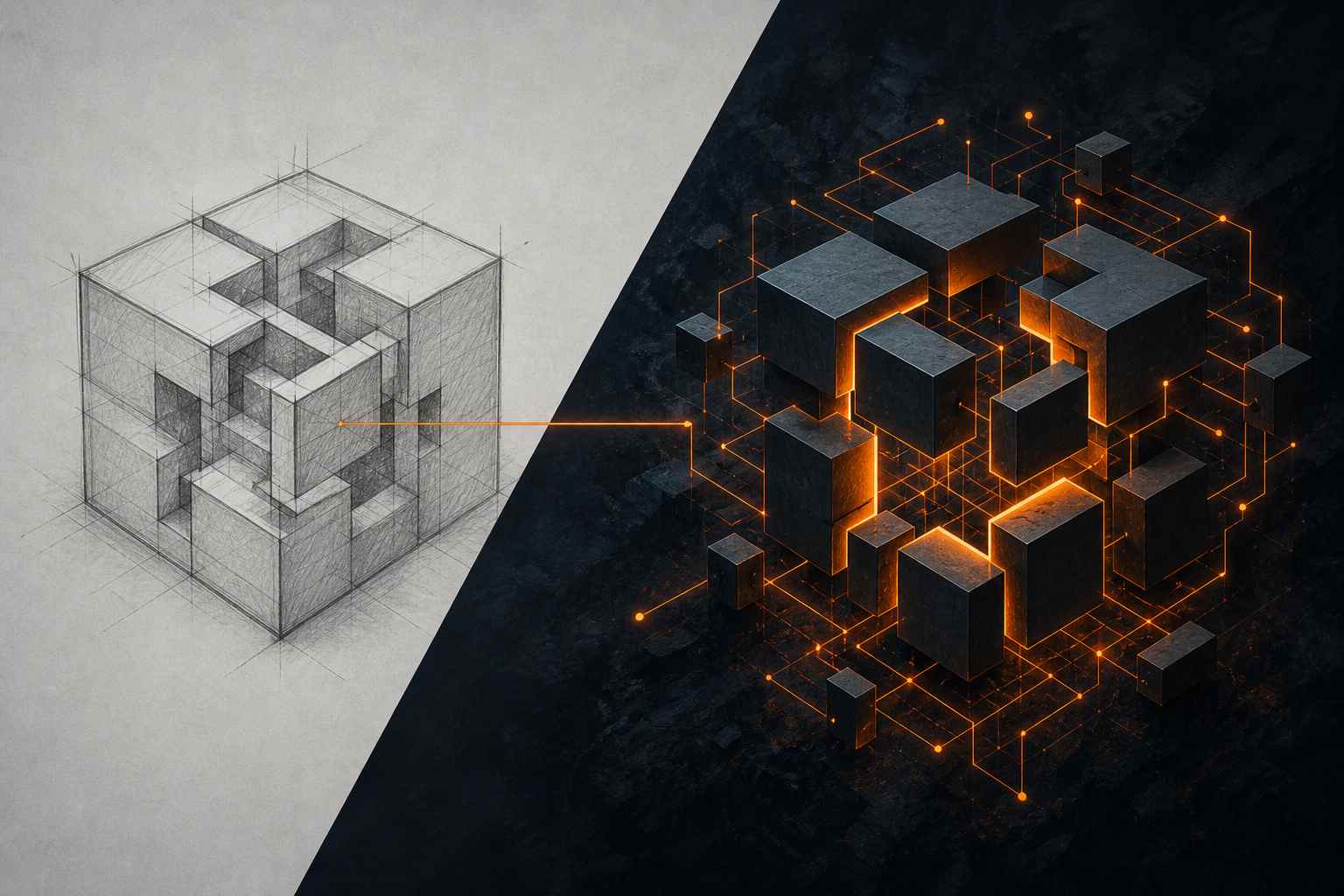
The demo is not the product
It has never been easier to get something on a screen. You can describe a workflow, generate a UI, and click through a happy path before lunch.
That is useful. It is also where a lot of teams get stuck.
The demo answers “can this exist?” Production answers “does this fit how we already work, and can we live with it next quarter?” Those are different jobs. The first is generation. The second is judgment.
What vibe-coded usually gets you
Vibe-coded software is a prototype shaped by the prompt you happened to write. It tends to encode a generic company: clean roles, complete data, one happy path, no history.
Real companies are not generic. They have the exception that happens every Friday. The approval that lives in someone’s head. The spreadsheet that is the system of record whether anyone admits it or not. The integration that cannot go down during month-end.
A demo can skip all of that. A product cannot.
Context-right means the software fits this company: how work already moves, who decides, what already exists, and what would break if you replaced the wrong piece.
Start with research, not another screen
If you skip discovery and research, you are guessing which company you are building for.
Sentral’s UI/UX process starts there on purpose: interviews, journey mapping, and usability tests before implementation. That is not ceremony. It is how you find the moments the prompt never saw.
A research-first pass usually surfaces a short list:
- Who actually uses this, and on what device
- Which step is painful versus merely ugly
- What must stay the same because the rest of the business depends on it
- Where a new screen would create a second source of truth
Until those are named, more code is just a more expensive guess.
More on that: Start with research, not another screen.
Then pick a stack that can be maintained
Custom software work at Sentral starts with discovery and strategy, then design, then a build that is meant to be scalable and hooked into existing systems. The last steps are testing, launch, and ongoing support. That sequence is the point.
The architectural questions are boring and they are the ones that decide whether the demo survives:
- Where does the real data live, and who owns writes
- What already exists that this has to talk to
- What happens when that other system is slow or wrong
- Who can change this six months from now without the original author
- What you will actually maintain, versus what you will regret
Anyone can generate a first version. Hiring an expert is for making those choices in context, then getting the thing across the line.
The last mile is the job
The last mile is not a deploy button. It is the work after the demo looks done:
- Making the happy path match the exception path
- QA on the messy cases, not just the screenshot
- Launching into a real environment (stores, servers, the tools people already open)
- Staying on for maintenance and updates so the thing does not rot
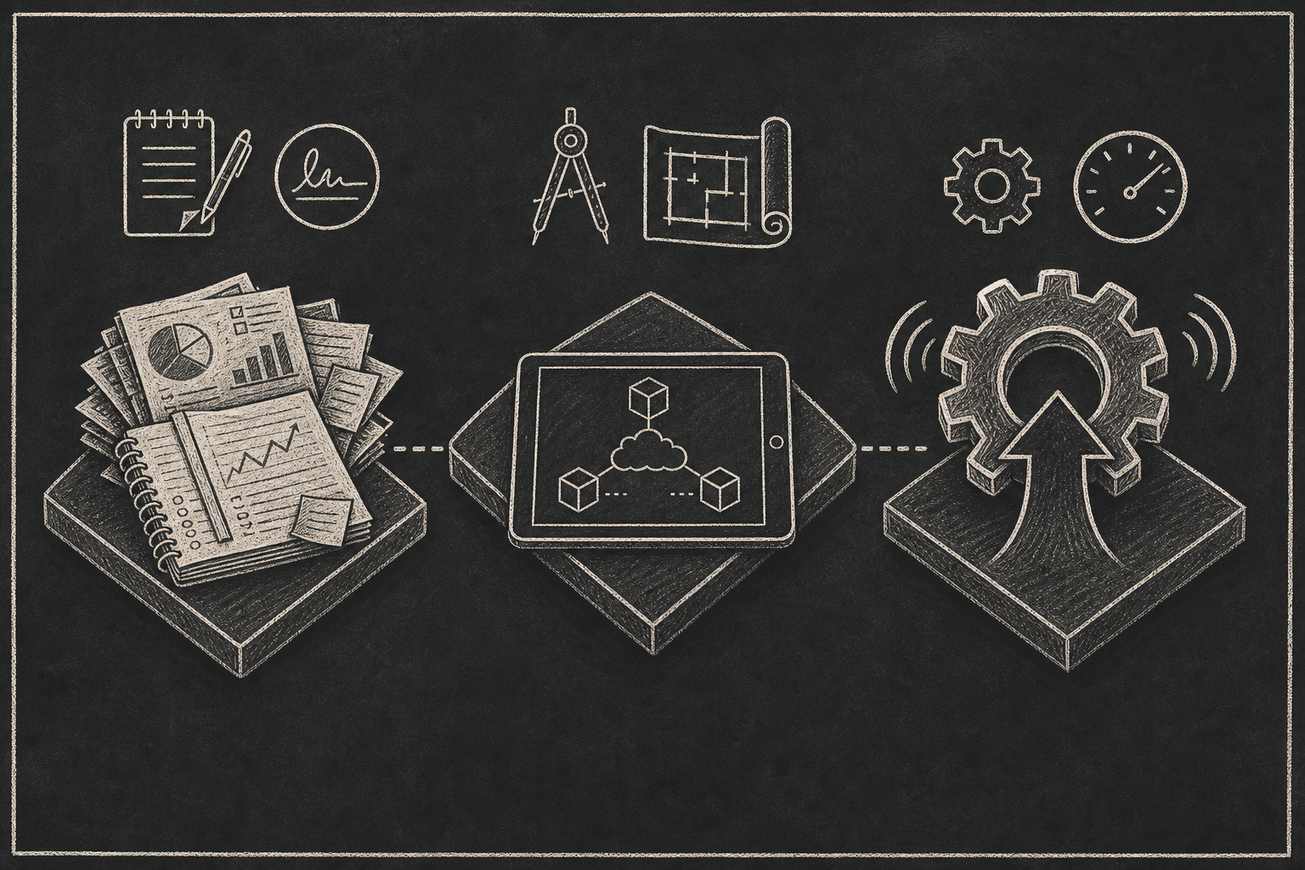
That is why “we vibe-coded an app” and “we run this in the business” are different sentences. The gap is architecture, research, and follow-through. Not more prompts.
When to keep the prototype, and when to hire
Keep the vibe-coded version when it is a spike: you needed to see if the idea was real, and you are willing to throw it away.
Hire when the demo is starting to become the system. When it has to talk to what you already run. When someone other than the builder has to use it under pressure. When you will still need it after the person who generated it has moved on.
If that is where you are, talk to us before you pour more prompts into a foundation that cannot carry the company.