
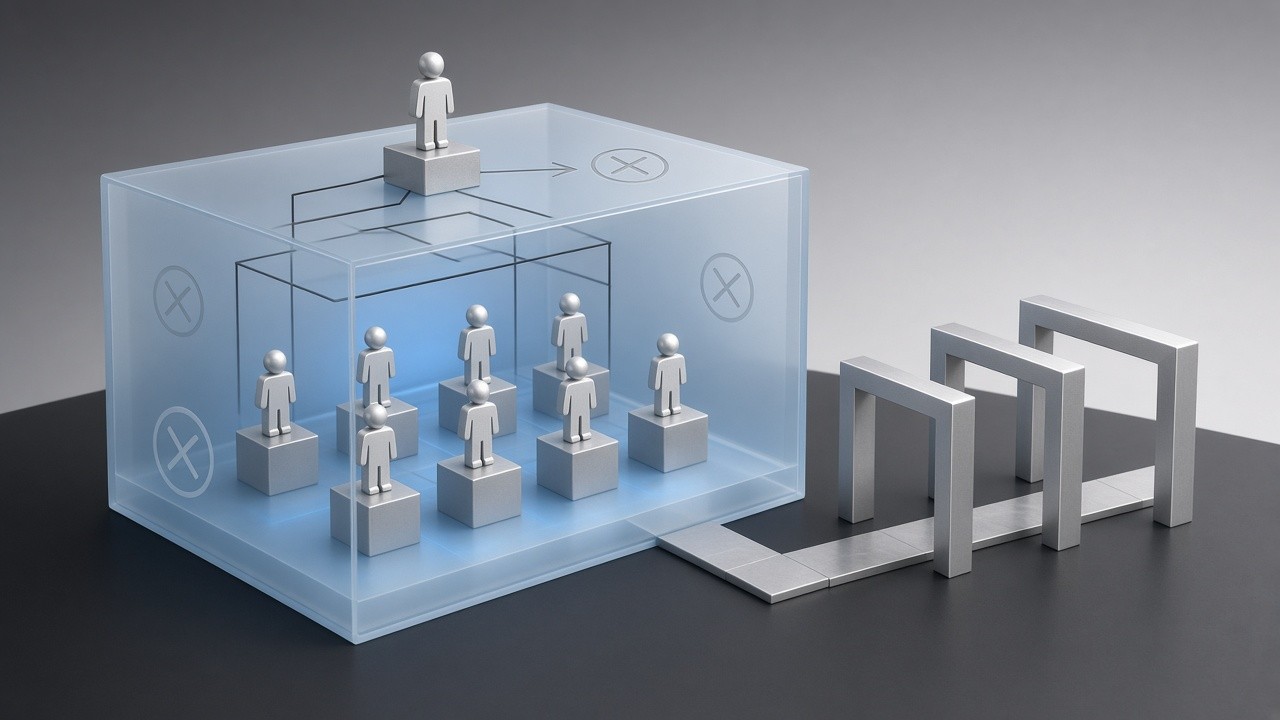
Draw this first
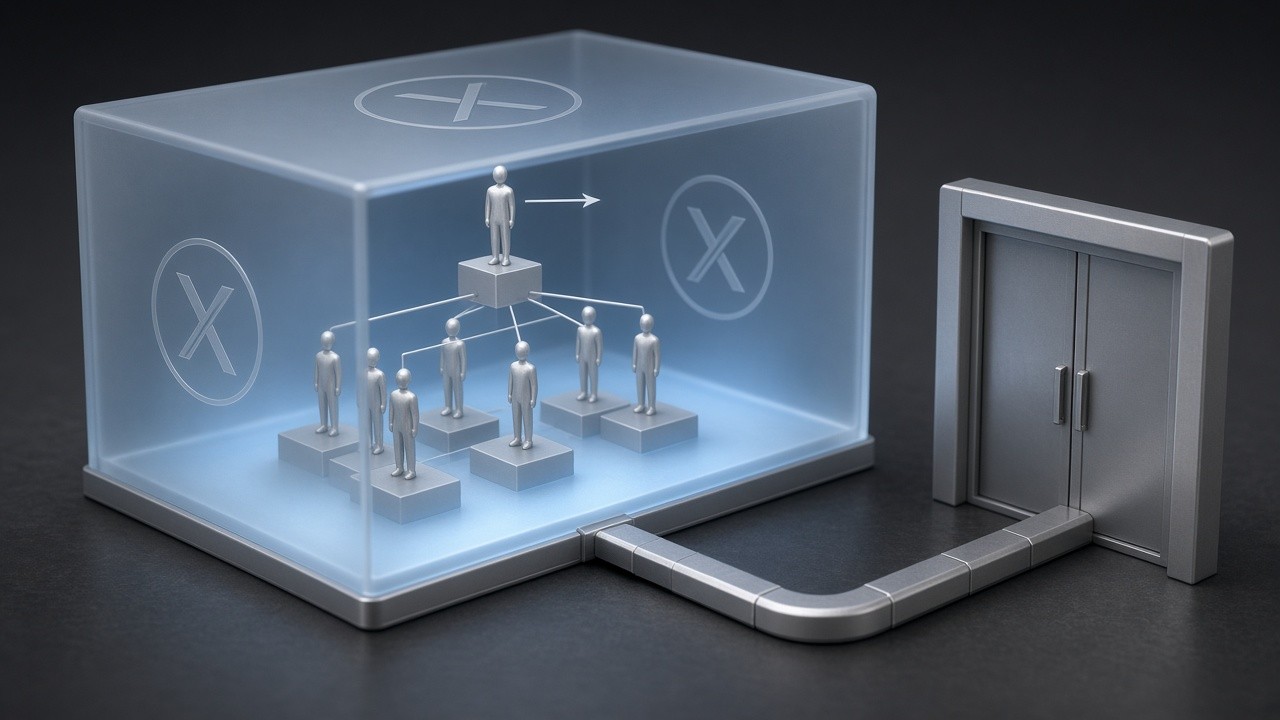
You sit at the top. You are extra. Under you, one room per outcome, not one room for the company. In that room: a Chief of Staff plus two to five specialists. That is the cap the product itself uses: two to six bots in a group. You are not one of those six.
The CoS routes. It does not do the specialist’s job. Specialists speak when they own the step. DMs are for 1:1 deep work, course-correcting one bot, and images one bot has to inspect. Group handoffs are text-only. Split businesses in sidebar sections. Do not build a mega-room.
flowchart TB
  you[You]
  room["Leadership room<br/>one outcome"]
  you --> room
  cos[Chief of Staff]
  spec1[Specialist]
  spec2[Specialist]
  spec3[Specialist]
  room --- cos
  room --- spec1
  room --- spec2
  room --- spec3
  dms["DMs: 1:1, course-correct,<br/>bot-to-bot images"]
  spec1 -.-> dms
  spec2 -.-> dms
That diagram is the post. The rest is how not to drown.
The DM pile is not a team
Grok Bot is built to feel like messaging a teammate. People spin up a Researcher, a Writer, a Project Manager, then talk to each of them in a private thread. Every handoff lives in your head. Nobody can see who owns the next step.
The docs already tell you when to stop doing that. Start a group when several bots need one shared outcome and visible handoffs. Give each bot a job with a distinct goal, tools, and approval boundary. An account can hold 50 bots and group chats combined. Spend that cap on rooms with owners, not on a twelfth general helper.
The SERP right now is plugin lists and “add a Chief of Staff” checklists. Fine. Nobody is drawing rooms versus DMs. That is the miss.
One room, one outcome, one owner per stage
Kick the room off with names on the next step. The xAI example is the right shape: one bot gathers sources, one turns them into a draft, one checks the draft. Do not publish anything until you say so.
- Write normally when the room can decide who answers.
@one bot when that teammate owns the request.- Mention several only when the request genuinely needs each of them.
- Use
@everyonesparingly. A group-wide ping is not a workflow.
Ask for a single owner at each stage. Parallel handoffs duplicate work and fill the transcript with noise.
Threads hold feedback on one result. Reactions are acknowledgement. A safety-critical change is a written reply, not an emoji.
What belongs in a DM
Keep the 1:1 open for:
- Deep work that is not the shared outcome
- Steering or stopping one bot without waking the room
- Images. Your messages in a group can include attachments. Bot-to-group handoffs are text-only. If a specialist must inspect a still, send it to that bot directly.
The CoS should stay quiet when the step is specialist work. That is the whole point of the roster.
Sidebar sections split businesses
Sidebar sections group bots by project, client, or company so two businesses do not share a sidebar. On iOS: swipe the bot row, Move to, New Section. Sections sync to desktop. Deleting a section moves bots to Unassigned. It does not delete them.
Hide a bot you are not using. Hide from sidebar removes it from the main list without deleting work. Show hidden chats restores it. Hiding does not pause routines. Delete only when you mean to destroy the profile, conversation, and routines.
The shared computer is not a wall
Bots have separate roles and conversations. They share the computer. Files and sign-ins are not isolated by bot. Treat that as an operating fact, not a security boundary. Do not paste keys into chat. Do not assume a Writer cannot see what an Inbox bot signed into.
Do not start with a mega-room
Start with the smallest useful roster. One bot owns the end-to-end outcome. Add a specialist only when the role is stable. Put them in a group when the handoff itself needs to be visible.
That is how we run Sentral content: one leadership room, a CoS that routes, specialists that speak when they own the step. Consulting is the same job for a company: map the real handoffs, then encode them. Custom software is what you build when the unofficial tracker is already the system.
If your bots already live in a pile of DMs, talk to us about the operating model, not another agent.
Questions
Why not one room for everything?
A group is two to six bots. You sit above it. One outcome per room. A mega-room is how @everyone becomes the workflow and nobody owns the stage.
When is a DM the right surface?
1:1 deep work, steering one bot, and images another bot has to see. The leadership room is for the shared outcome and the visible handoff.
Who talks in the leadership room?
You set the outcome. The Chief of Staff routes. Specialists speak when they own the step. Everyone else stays quiet.
Should I delete bots I am not using?
No. Hide them. Delete removes the profile, conversation, and routines. Hide keeps the work.